Criteria for Determining a Second-Degree Type 1 Heart Block
ACLS Certification Association videos have been peer-reviewed for medical accuracy by the ACA medical review board.
Article at a Glance
- Second-degree heart block Type I (Wenckebach) is characterized by:
- Regularity: R to R irregular with grouped beats
- Rate: Usually slower than normal
- P Wave: P waves are uniform but not always followed by QRS
- PR Interval: Becomes progressively longer until a P wave is blocked and the QRS is dropped
- QRS Complex: < 0.12 seconds
Criteria to Determine a Second-Degree Type I Heart Block
First, look at the relationship between the P wave and the QRS complex. In a second-degree Type I heart block, you’ll find an increasingly longer PR interval until the QRS complex drops off, unlike a first degree heart block where the PR interval is consistently prolonged but every QRS is conducted.
Related Video – ECG and the Cardiac Cycle Basics
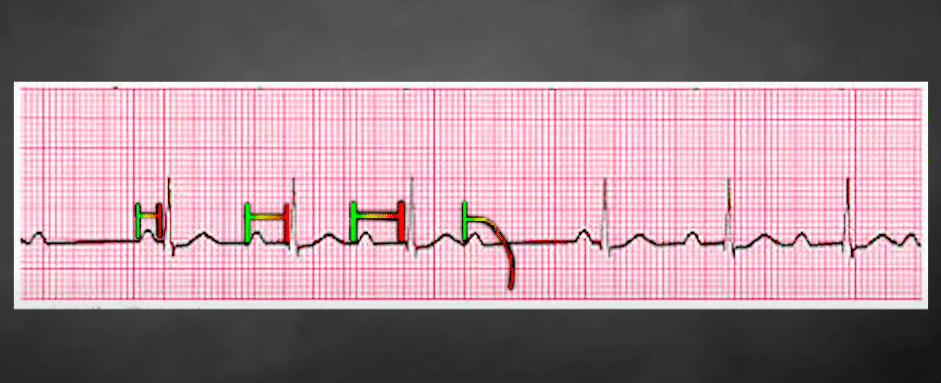
The PR interval becomes increasingly longer until the QRS complex drops off.
In the image above, the second PR interval is longer than the first and so on. The QRS complex drops off, and then it starts over. It’s the telltale sign for a second-degree type 1 heart block.
Summary
To diagnose a second-degree atrioventricular block, providers must interpret an ECG diagram, paying close attention to the P waves, PR interval, and QRS complex. During a second-degree type 1 heart block, the PR interval increases until the QRS complex drops off.
Related Video – What are Atrioventricular Blocks?
More Free Resources to Keep You at Your Best
Editorial Note
ACLS Certification Association (ACA) uses only high-quality medical resources and peer-reviewed studies to support the facts within our articles. Explore our editorial process to learn how our content reflects clinical accuracy and the latest best practices in medicine. As an ACA Authorized Training Center, all content is reviewed for medical accuracy by the ACA Medical Review Board.
More to Learn
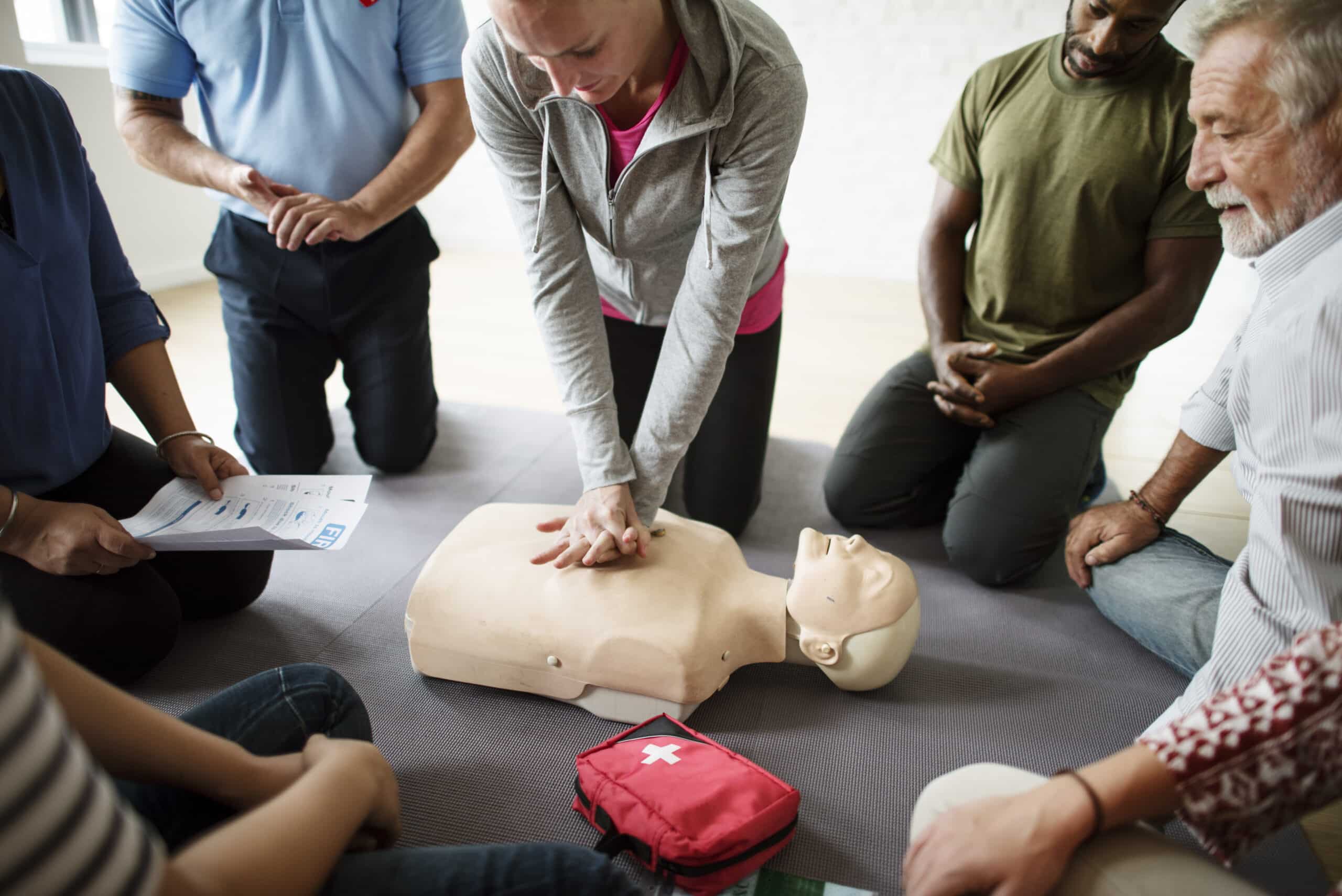
Keep your life-saving skills current with the 2017 AHA focused update on adult and pediatric basic life support and CPR. Included are the revised AHA guidelines regarding cardiopulmonary resuscitation and ECC.
Discover the role of morphine in ACLS and its indications for ACS. Our article allows you to explore the effects and benefits of morphine in cardiac emergencies.