ACLS Drugs – Epinephrine
This ACLS epinephrine guide is for students, clinicians, and code-team members who need a quick adult dosing lookup and a safer way to distinguish epinephrine concentrations. It explains when epinephrine is used in cardiac arrest, symptomatic bradycardia, post–cardiac arrest hypotension, and anaphylaxis, with emphasis on route, concentration, and dose-safety checks.
ACLS Certification Association videos have been peer-reviewed for medical accuracy by the ACA medical review board.
Article at a Glance
- Epinephrine, also called adrenaline, is a sympathomimetic medication that stimulates alpha and beta receptors to support perfusion, heart rate, contractility, and bronchodilation.
- ACLS dosing summary: adult cardiac arrest: 1 mg IV/IO every 3–5 minutes; symptomatic bradycardia: epinephrine infusion 2–10 mcg/min, titrated to response; adult anaphylaxis: 0.3–0.5 mg IM using 1 mg/mL.
- Routes matter. Cardiac arrest dosing is primarily IV/IO, ET is an alternative when vascular access is unavailable, bradycardia uses an IV infusion, and anaphylaxis uses IM administration.
- Concentration matters. Adult cardiac arrest uses 0.1 mg/mL, commonly supplied as 1 mg/10 mL, while IM anaphylaxis uses 1 mg/mL, also written as 1:1,000.
Epinephrine Overview
Epinephrine, also known as adrenaline, is produced primarily by chromaffin cells in the adrenal medulla. It is also used as an emergency medication in ACLS and other acute-care settings.
Epinephrine binds to adrenergic receptors in the sympathetic nervous system. Because it mimics sympathetic “fight-or-flight” effects, epinephrine is classified as a sympathomimetic medication.

Epinephrine is produced primarily in the adrenal medulla.
Physiology of the Adrenal Gland
This video reviews adrenal gland physiology, including how the adrenal cortex and adrenal medulla differ. It fits here because epinephrine is produced primarily in the adrenal medulla, not the adrenal cortex.
Effects of Epinephrine
Epinephrine stimulates alpha and beta adrenergic receptors. In ACLS, alpha-1 vasoconstriction is especially important because it can help increase aortic diastolic pressure and support coronary and cerebral perfusion pressure during high-quality CPR.
Alpha-1 receptors are located in peripheral blood vessels. When stimulated, they cause vasoconstriction and help raise blood pressure.
There are two key beta receptor effects to remember:
- Beta-1 receptors are primarily associated with the heart.
- Beta-2 receptors are associated with bronchial smooth muscle in the lungs.
A helpful mnemonic is that you have one heart and two lungs.
Read: ACLS Drugs – Dopamine
Beta-1 stimulation can increase heart rate, which is a positive chronotropic effect. It can improve conduction through the AV node, which is a positive dromotropic effect. It can also increase contractility, which is a positive inotropic effect.
Beta-2 stimulation can support bronchodilation, which is clinically useful when epinephrine is used for anaphylaxis with bronchoconstriction.
Indications and Dosing of Epinephrine
There are several situations in which we administer epinephrine, including cardiac arrest, bradycardia, and anaphylaxis.
ACLS Routes (IV, IO, and ET)
In ACLS, epinephrine is most often given by the intravenous (IV) or intraosseous (IO) route. IV and IO access are preferred because they provide more predictable drug delivery during resuscitation.
The endotracheal tube (ET) route is an alternative only when IV or IO access is not available. ET absorption is less predictable, so ET dosing is higher and should follow the applicable adult cardiac arrest protocol.
Cardiac Arrest
In adult cardiac arrest, epinephrine is given as 1 mg IV/IO every 3–5 minutes according to the adult cardiac arrest algorithm. During a code, epinephrine is typically administered as a rapid IV/IO push, followed by a saline flush and immediate continuation of high-quality CPR.
The preferred concentration for adult cardiac arrest push-dose administration is 0.1 mg/mL, commonly supplied as 1 mg/10 mL. This is the same concentration historically described as 1:10,000.
Why concentration matters
A 1 mg/mL vial is the same as a 1:1,000 concentration. That concentration is commonly used for IM anaphylaxis and for preparing some infusions, but it should not be given undiluted as a routine rapid IV push in adult cardiac arrest. When a 1 mg/1 mL vial must be used for an arrest dose, dilute according to local protocol so the final dose is appropriate for IV/IO push administration.
Dose-safety clarifications
- No routine 2 mg pushes: Adult ACLS cardiac arrest dosing is 1 mg IV/IO every 3–5 minutes; higher routine IV/IO bolus doses are not recommended.
- No fixed maximum number of doses: ACLS does not use a simple maximum-dose cutoff during prolonged resuscitation. Dosing continues according to the rhythm, timing, response, ROSC, and team decision about ongoing resuscitation.
- Do not delay CPR or defibrillation: Medication administration should be coordinated without interrupting high-quality chest compressions.
Rhythm-based sequencing
For asystole or pulseless electrical activity, epinephrine is given as soon as possible. For ventricular fibrillation or pulseless ventricular tachycardia, CPR and defibrillation remain priorities, and epinephrine is added if the shockable rhythm persists. Teams do not simply “switch to amiodarone” after one epinephrine dose; amiodarone or lidocaine is added for refractory shockable rhythms while epinephrine continues every 3–5 minutes as indicated.
Endotracheal tube alternative
If IV or IO access is unavailable, epinephrine may be given through the ET tube according to protocol. Adult ET dosing is typically higher than IV/IO dosing because absorption is less predictable; common teaching uses 2–2.5 mg diluted in 5–10 mL of sterile water or normal saline. Establish IV or IO access as soon as possible.
For the broader rhythm sequence and arrest workflow, see the adult cardiac arrest algorithm and the ultimate guide to ACLS algorithms for cardiac arrest.
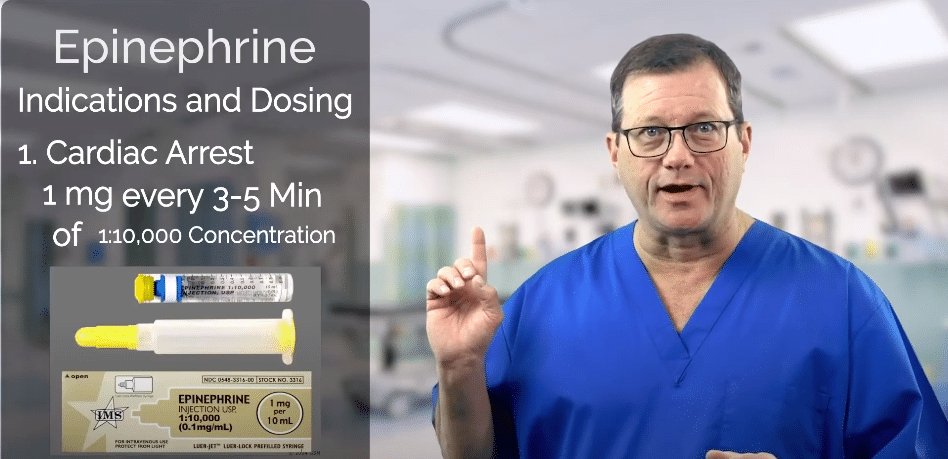
For adult cardiac arrest, epinephrine is commonly supplied as 1 mg/10 mL, equivalent to 0.1 mg/mL.
Post–Cardiac Arrest Hypotension (Infusion)
After return of spontaneous circulation (ROSC), epinephrine may be used as a vasopressor infusion when hypotension persists despite appropriate airway, oxygenation, ventilation, fluid, and cause-directed management. The goal is to support perfusion while the team evaluates the cause of arrest and treats post-arrest complications.
A commonly taught adult dosing range is 0.1–0.5 mcg/kg/min IV infusion, titrated to blood pressure and perfusion goals according to local protocol. The post–cardiac arrest care pathway emphasizes hemodynamic management, including vasopressors and/or fluid resuscitation as needed, with a target MAP of at least 65 mmHg.
Bradycardia
Epinephrine may be used for symptomatic bradycardia with cardiopulmonary compromise when atropine is ineffective, while preparing for pacing, or when pacing is not immediately available. For the full workflow, see Bradycardia with a pulse.
The current AHA adult bradycardia algorithm lists epinephrine IV infusion at 2–10 mcg/min, titrated to patient response. Always follow the active local protocol, medication concentration available, and code-team direction.
Infusion preparation and concentration
A common preparation example is to add 1 mg epinephrine, often supplied as 1 mg/1 mL or 1 mg/mL, to 250 mL of D5W or normal saline. This creates a concentration of 4 mcg/mL. At that concentration, 2 mcg/min equals 30 mL/hr and 10 mcg/min equals 150 mL/hr.
Label the bag and pump clearly, use a controlled infusion device, titrate to patient response, and monitor heart rate, rhythm, blood pressure, symptoms, and signs of improved perfusion.
Understanding the Adult Bradycardia with a Pulse Algorithm
This video reviews the adult bradycardia pathway, including when atropine, pacing, dopamine, or epinephrine infusion may be considered. It fits here because epinephrine for bradycardia is used as a titrated infusion rather than a cardiac-arrest push dose.
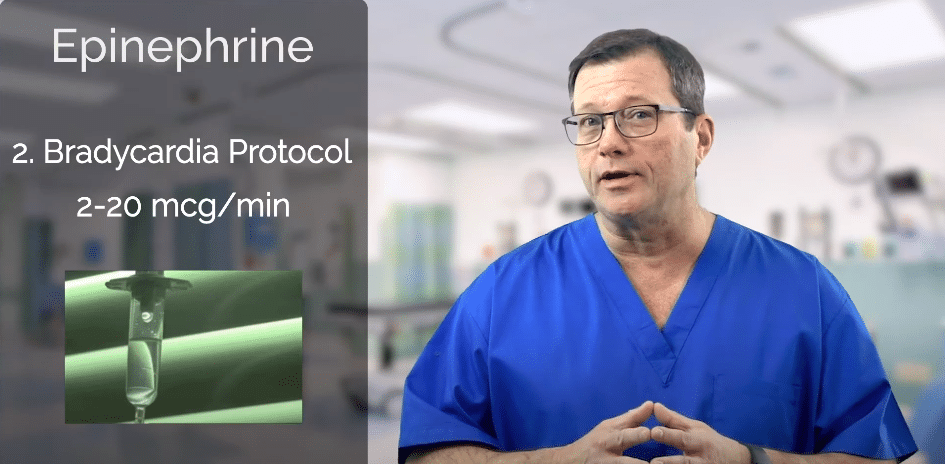
Epinephrine may be used as an infusion in symptomatic bradycardia when atropine is ineffective or while pacing is being arranged.
Allergic Reaction and Anaphylaxis
Epinephrine is first-line treatment for anaphylaxis. In adults, a commonly taught dose is 0.3–0.5 mg IM into the mid-outer thigh, using the 1 mg/mL preparation. Some protocols list a slightly wider dose range, so follow local policy and medication labeling.
Concentration clarification: 1:1,000 equals 1 mg/mL. This is the IM anaphylaxis concentration and should not be confused with the 0.1 mg/mL concentration commonly used for adult cardiac arrest IV/IO push dosing.
Anaphylaxis: Introduction
This video introduces anaphylaxis, including how severe allergic reactions can affect breathing, circulation, and airway risk. It fits here because epinephrine dosing and route selection differ between anaphylaxis and cardiac arrest.
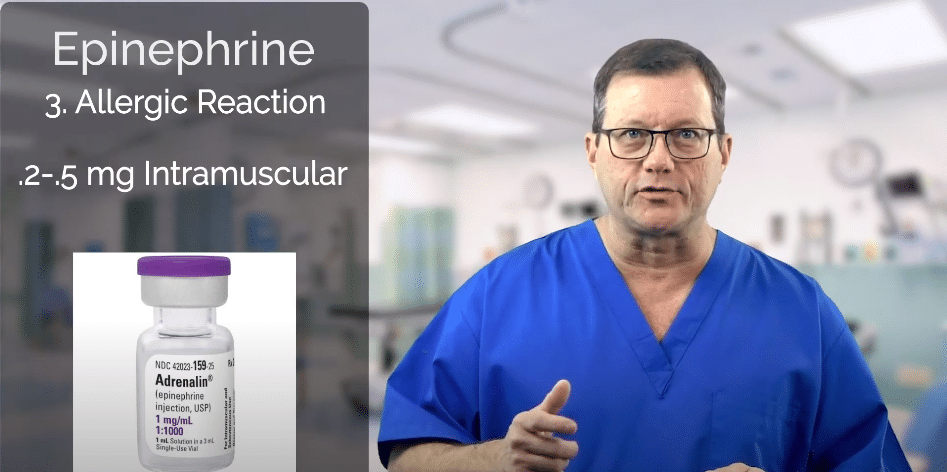
The 1:1,000 concentration equals 1 mg/mL and is used for IM epinephrine in anaphylaxis.
Special Considerations
During cardiac arrest, follow IV/IO epinephrine administration with a saline flush, commonly 10–20 mL, and resume chest compressions immediately. The goal is to move the medication into central circulation while maintaining high-quality CPR.
Does 10 mL vs. 20 mL saline make a meaningful difference?
The exact flush volume should follow local protocol and access type. In practice, the key safety points are to confirm line patency, give an adequate flush promptly, and continue compressions so medication reaches central circulation.
Can a pressure bag be used after the push?
A pressure bag may help maintain flow through an infusion line, but it should not replace the medication push-and-flush sequence. Use a controlled technique, confirm line compatibility, avoid accidentally bolusing other medications, and make sure the team knows which line is being used for code drugs.
What if the patient is already on an epinephrine infusion and then codes?
Start the cardiac arrest algorithm and do not assume the infusion replaces the standard arrest dose. Give epinephrine 1 mg IV/IO every 3–5 minutes according to the arrest protocol while the team reassesses the infusion, pump, vascular access, rhythm, and perfusion.
Summary
Epinephrine, also known as adrenaline, is produced primarily in the adrenal medulla and acts on alpha and beta adrenergic receptors. In ACLS, its most important uses include adult cardiac arrest, symptomatic bradycardia infusion, post–cardiac arrest hypotension support, and anaphylaxis treatment.
Concentration and route selection are the major safety points. Adult cardiac arrest uses 1 mg IV/IO every 3–5 minutes, commonly supplied as 1 mg/10 mL or 0.1 mg/mL. Adult anaphylaxis uses IM epinephrine, commonly 0.3–0.5 mg of the 1 mg/mL concentration.
For bradycardia or post-arrest hypotension, epinephrine is used as a titrated infusion rather than a rapid arrest-dose push. Always verify the concentration, route, dose, pump settings, line patency, and local protocol before administration.
More Free Resources to Keep You at Your Best
Editorial Sources
ACLS Certification Association (ACA) uses only high-quality medical resources and peer-reviewed studies to support the facts within our articles. Explore our editorial process to learn how our content reflects clinical accuracy and the latest best practices in medicine. As an ACA Authorized Training Center, all content is reviewed for medical accuracy by the ACA Medical Review Board.
More to Learn
Understand the differences between CPR and defibrillation by reading our article. Learn about their critical roles in cardiopulmonary resuscitation and life-saving interventions.
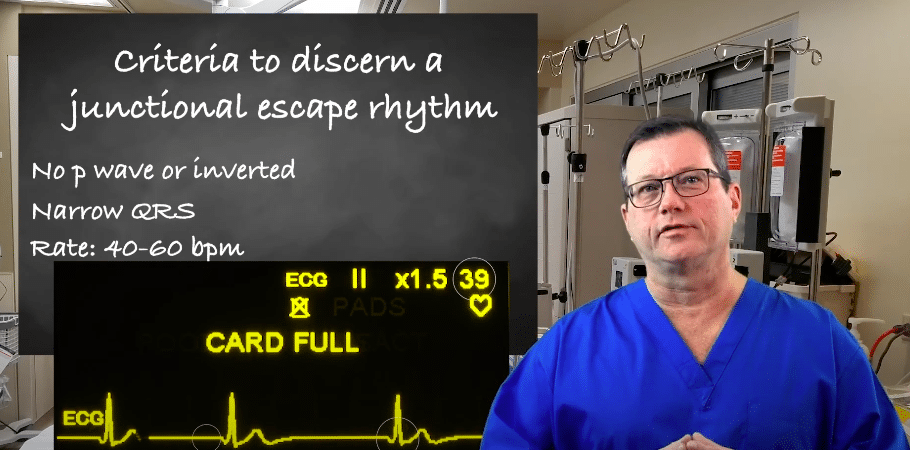
Learn about junctional escape rhythm criteria for ACLS certification with our article. Understand the guidelines and requirements seamlessly.