Differences Between CPR and Defibrillation
CPR and defibrillation work together during cardiac arrest, but they do different jobs. CPR keeps blood moving to the brain and heart, while defibrillation delivers an electrical shock to treat shockable rhythms such as ventricular fibrillation or pulseless ventricular tachycardia.
This guide is written for both bystanders using an automated external defibrillator (AED) and healthcare providers using a manual defibrillator. It explains when to start CPR, when to use an AED or defibrillator, and how the two fit together during sudden cardiac arrest.
ACLS Certification Association videos have been peer-reviewed for medical accuracy by the ACA medical review board.
Article at a Glance
- CPR buys time. Chest compressions help circulate blood to the brain and heart until a normal rhythm can be restored.
- Defibrillation treats shockable rhythms. A defibrillator can help reset ventricular fibrillation or pulseless ventricular tachycardia, but it is not used for every cardiac arrest rhythm.
- For bystanders: if the person is unresponsive and not breathing normally, call emergency services, start CPR, get an AED, and follow the prompts. The AED decides whether shock is advised.
- For witnessed, monitored VF or pulseless VT: healthcare providers should deliver defibrillation as soon as the shockable rhythm is confirmed while minimizing CPR interruptions.
CPR vs Defibrillator: What’s the Difference and When Should You Use Them?
The main difference is purpose. CPR supports circulation when the heart is not pumping effectively, while defibrillation delivers an electrical shock only when a shockable rhythm is present.
What is CPR?
Cardiopulmonary resuscitation (CPR) uses chest compressions, with or without rescue breaths depending on training and setting, to move blood through the body during cardiac arrest. CPR usually does not “restart” the heart by itself; instead, it buys time by helping deliver oxygenated blood to the brain and heart until defibrillation, medications, or treatment of the underlying cause can restore circulation.
Understanding the Limitations of CPR
This video explains why CPR is essential but limited. It fits here because CPR helps maintain circulation, but defibrillation is still needed when the arrest rhythm is shockable.
What is a Defibrillator?
A defibrillator is a device that delivers an electrical shock to the heart to treat certain abnormal rhythms. A manual defibrillator is used by trained clinicians who interpret the rhythm, while an AED gives voice or visual prompts and analyzes the rhythm for the rescuer.
An AED will not advise a shock unless it detects a shockable rhythm. Shockable rhythms include ventricular fibrillation and pulseless ventricular tachycardia; non-shockable rhythms such as asystole or pulseless electrical activity require CPR and treatment of underlying causes rather than defibrillation. AEDs are designed to analyze rhythm and guide whether shock is needed.
How Does AED Work?
A typical AED workflow is simple:
- Turn on the AED and follow the voice or screen prompts.
- Expose the chest and attach the pads as shown on the diagrams.
- Let the AED analyze the rhythm; make sure no one is touching the patient.
- If shock is advised, clear the patient and deliver the shock when prompted.
- If no shock is advised, resume CPR immediately and continue following AED prompts.
- Continue CPR cycles, rhythm analysis, and shocks when advised until help arrives or the person shows clear signs of life.
Can CPR and a Defibrillator Be Used Together?
Yes. CPR and a defibrillator are usually used together during cardiac arrest. CPR should begin right away while someone calls emergency services and retrieves an AED or defibrillator.
- Check responsiveness and breathing. If the person is unresponsive and not breathing normally, activate emergency response.
- Start CPR. Begin chest compressions while the AED or defibrillator is being brought to the patient.
- Attach pads as soon as possible. Keep interruptions in compressions as short as possible.
- Analyze the rhythm. The AED analyzes automatically; providers using a manual defibrillator interpret the rhythm.
- Shock if advised or indicated. Deliver a shock only for shockable rhythms or when the AED advises shock.
- Resume CPR immediately. After a shock, continue CPR until the next rhythm check or AED prompt.
The key is not CPR versus defibrillation as competing choices. The goal is coordinated action: start CPR early, use the defibrillator quickly, shock when appropriate, and minimize pauses.
What is the Chain of Survival?
The Chain of Survival describes the major actions that improve survival after cardiac arrest. CPR and defibrillation are two central links in that chain.
- Recognize cardiac arrest and activate emergency response.
- Start CPR early.
- Use an AED or defibrillator early when available.
- Provide advanced life support.
- Continue post-arrest care and recovery support.
For bystanders, the first priorities are to call emergency services, start CPR, and use an AED as soon as possible. Early CPR and early defibrillation are key steps in the Chain of Survival.
CPR or Defibrillation First?
The answer depends on the setting. For a bystander, start CPR immediately when a person is unresponsive and not breathing normally, then use an AED as soon as it arrives. For a witnessed, monitored arrest with confirmed ventricular fibrillation (VF) or pulseless ventricular tachycardia (VT), healthcare providers should deliver defibrillation as soon as possible while keeping CPR interruptions brief.
Do not interpret “defibrillate immediately” as meaning every collapse should be shocked. Shock is appropriate only when a shockable rhythm is confirmed on a monitor or when an AED advises shock. While the AED is retrieved, pads are placed, or the defibrillator is charging, CPR should continue whenever it is safe to do so.
In provider-based adult cardiac arrest care, the AHA algorithm starts CPR, attaches a monitor/defibrillator, checks whether the rhythm is shockable, delivers shock for VF/pVT, then resumes CPR for 2 minutes. It also emphasizes high-quality CPR, minimizing interruptions, and using recommended shock energy based on device type. :contentReference[oaicite:5]{index=5}
Witnessed VF example
A long time ago, I was working in the emergency department (ED) as a brand-new paramedic. I had a 56-year-old patient who came to the hospital because she did not feel well. I helped her to the hospital bed, applied cardiac monitor leads, and took her blood pressure.
As I asked her questions, I looked at the monitor and saw ventricular fibrillation, a life-threatening shockable rhythm. I quickly set up the manual defibrillator and shocked her with 200 joules, a unit of electrical energy used for defibrillation. The patient instantly regained consciousness.
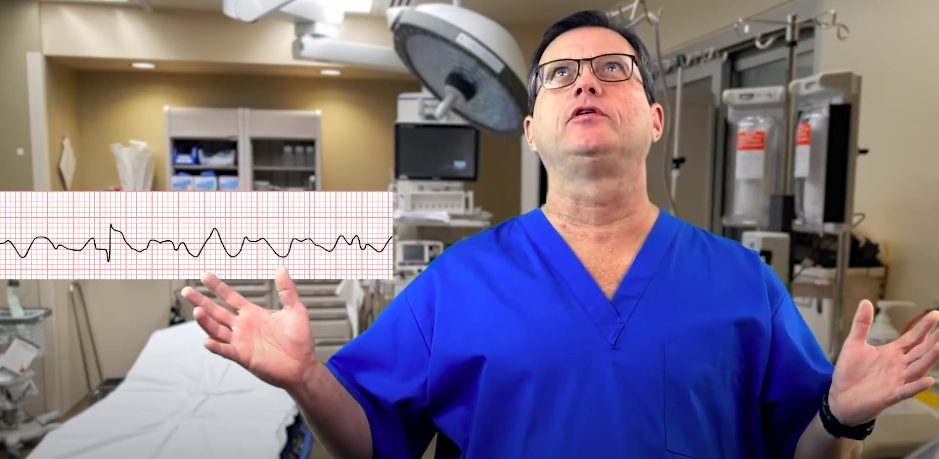
The patient in the story came into the hospital for ventricular fibrillation, a life-threatening arrhythmia.
After regaining consciousness, the patient exclaimed, “Oww!” because she had just received a shock to the chest. She went back into VF, and I shocked her again. She again regained consciousness, and I called for help. Thankfully, she went to the catheterization lab, also called the cath lab, for urgent heart evaluation and treatment and recovered fully.
In that specific witnessed, monitored VF scenario, the priority was immediate defibrillation. This differs from supraventricular tachyarrhythmias such as SVT vs ST, where SVT means supraventricular tachycardia and ST means sinus tachycardia. Those rhythms require different evaluation and management.
Read: Criteria for a SVT (supraventricular tachycardia)
ECG Rhythm Review – Ventricular Fibrillation
This video reviews ventricular fibrillation on ECG and explains why VF is treated as a shockable rhythm. It fits here because the “defibrillation first” concept applies most clearly when VF is witnessed or confirmed.
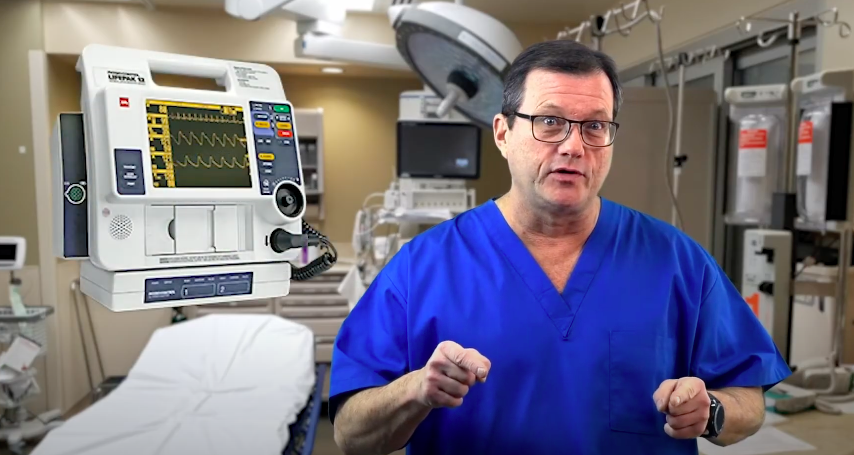
When VF or pulseless VT is confirmed, early defibrillation is the priority while minimizing interruptions in CPR.
Students often wonder if they can perform chest compressions while the defibrillator charges. Yes, compressions can continue while pads are placed and the defibrillator charges, as long as the team clears the patient before analysis and shock delivery. The priority is to minimize pauses and deliver the shock promptly when a shockable rhythm is confirmed.
Is CPR Before Defibrillation Dogmatic?
No. CPR before defibrillation is not a fixed rule that requires a set amount of compressions before every shock. If the collapse is unwitnessed or the AED is not yet available, start CPR while the AED is retrieved. If the arrest is witnessed, monitored, and VF or pulseless VT is confirmed with a defibrillator ready, deliver the shock as soon as possible and resume CPR immediately afterward.
Summary
CPR and defibrillation are different but complementary actions during cardiac arrest. CPR buys time by circulating blood to the brain and heart, while defibrillation treats shockable rhythms such as ventricular fibrillation and pulseless ventricular tachycardia.
For bystanders, the decision rule is simple: if the person is unresponsive and not breathing normally, call emergency services, start CPR, get an AED, and follow the prompts. The AED will analyze the rhythm and advise whether a shock is needed.
For healthcare providers managing a witnessed, monitored VF or pulseless VT arrest, defibrillation should occur as soon as the shockable rhythm is confirmed and the defibrillator is ready. CPR should continue during setup when possible, stop only for rhythm analysis and shock delivery, and resume immediately after the shock.
The key survival message is not “CPR or defibrillation” as an either/or choice. Early recognition, early CPR, early defibrillation, and rapid advanced care all work together to improve survival.
More Free Resources to Keep You at Your Best
Editorial Note
ACLS Certification Association (ACA) uses only high-quality medical resources and peer-reviewed studies to support the facts within our articles. Explore our editorial process to learn how our content reflects clinical accuracy and the latest best practices in medicine. As an ACA Authorized Training Center, all content is reviewed for medical accuracy by the ACA Medical Review Board.
More to Learn
After fibrinolytic or endovascular therapy has been performed, the patient will undergo general stroke care. General Stroke Care is explained in this section.
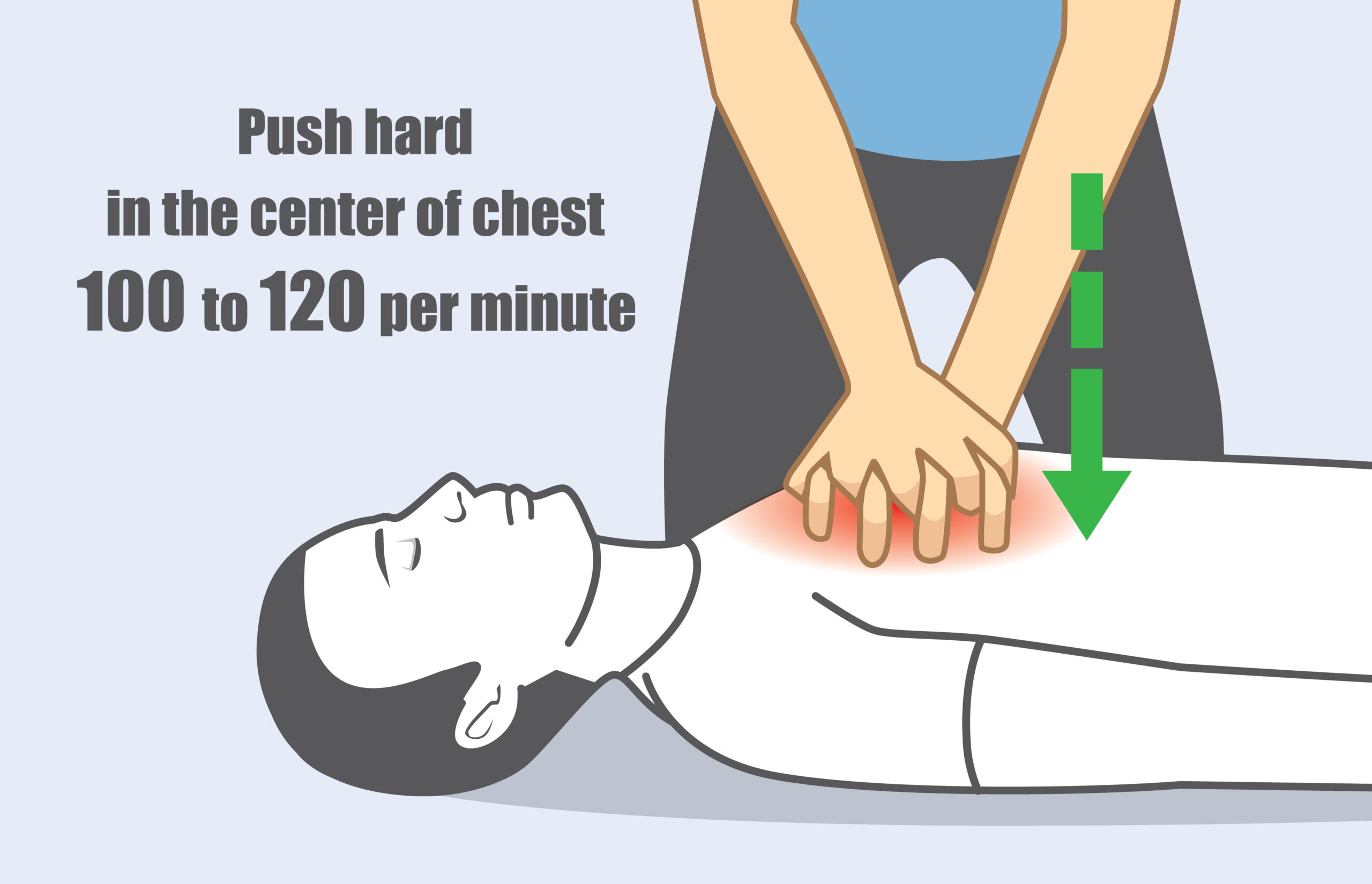
Read our Ultimate Guide to ACLS Algorithms and watch the video detailing cardiac arrest to learn the steps of PEA and Asystole treatment.