Infection Control and Isolation Precautions
Infection control is the broad set of practices used to reduce the spread of germs during patient care. Isolation precautions are specific steps used when a patient is known or suspected to carry an organism that may spread by contact, droplets, or airborne particles. This article explains how standard, contact, droplet, and airborne precautions work, what PPE is commonly used, and how to safely don and doff protective equipment.
ACLS Certification Association videos have been peer-reviewed for medical accuracy by the ACA medical review board.
Article at a Glance
- Infection control is the umbrella term for practices that reduce the spread of germs in clinical care areas.
- Isolation precautions are a transmission-control method used when standard precautions alone are not enough for a suspected or confirmed organism.
- Standard precautions apply to all patients, while contact, droplet, and airborne precautions add specific room placement, PPE, and movement controls.
- Safe PPE use depends on sequence. Clinicians should perform hand hygiene, put PPE on before exposure, remove it carefully, and clean hands after removal.
Introduction to PPE
Personal protective equipment (PPE) helps protect clinicians, patients, and visitors from exposure to infectious material. The four main precaution categories discussed in this article are:
- Standard or universal precautions
- Contact precautions
- Droplet precautions
- Airborne precautions
These principles are also reinforced in broader emergency-response and first aid certification online training, where learners review basic scene safety, hygiene, and exposure prevention.
| Precaution type | Typical PPE | Example pathogens or situations |
|---|---|---|
| Standard precautions | Gloves, mask, eye protection, or gown based on exposure risk | Blood, body fluids, contaminated equipment, sharps exposure risk |
| Contact precautions | Gloves and gown for room entry or contact with the patient environment | C. difficile, norovirus, draining wounds, multidrug-resistant organisms |
| Droplet precautions | Surgical mask; eye protection or gown if splash risk or facility policy requires | Influenza, pertussis, respiratory viruses spread by close-range droplets |
| Airborne precautions | Fit-tested N95 or higher-level respirator; additional PPE based on organism and task | Tuberculosis, measles, varicella, disseminated zoster |
Standard or Universal Precautions
Clinicians apply standard or universal precautions during all patient encounters. The CDC describes standard precautions as a risk-based approach that includes hand hygiene, PPE, respiratory hygiene and cough etiquette, sharps safety, safe injection practices, sterile instruments and devices, and cleaning or disinfection of environmental surfaces.
For authoritative guidance, review the CDC pages on standard precautions and hand hygiene and PPE use.
Clinicians should clean their hands before and after patient contact. Alcohol-based hand sanitizer is appropriate in many routine situations, but soap and water should be used when hands are visibly soiled and in certain organism-specific situations, such as C. difficile, according to facility policy.
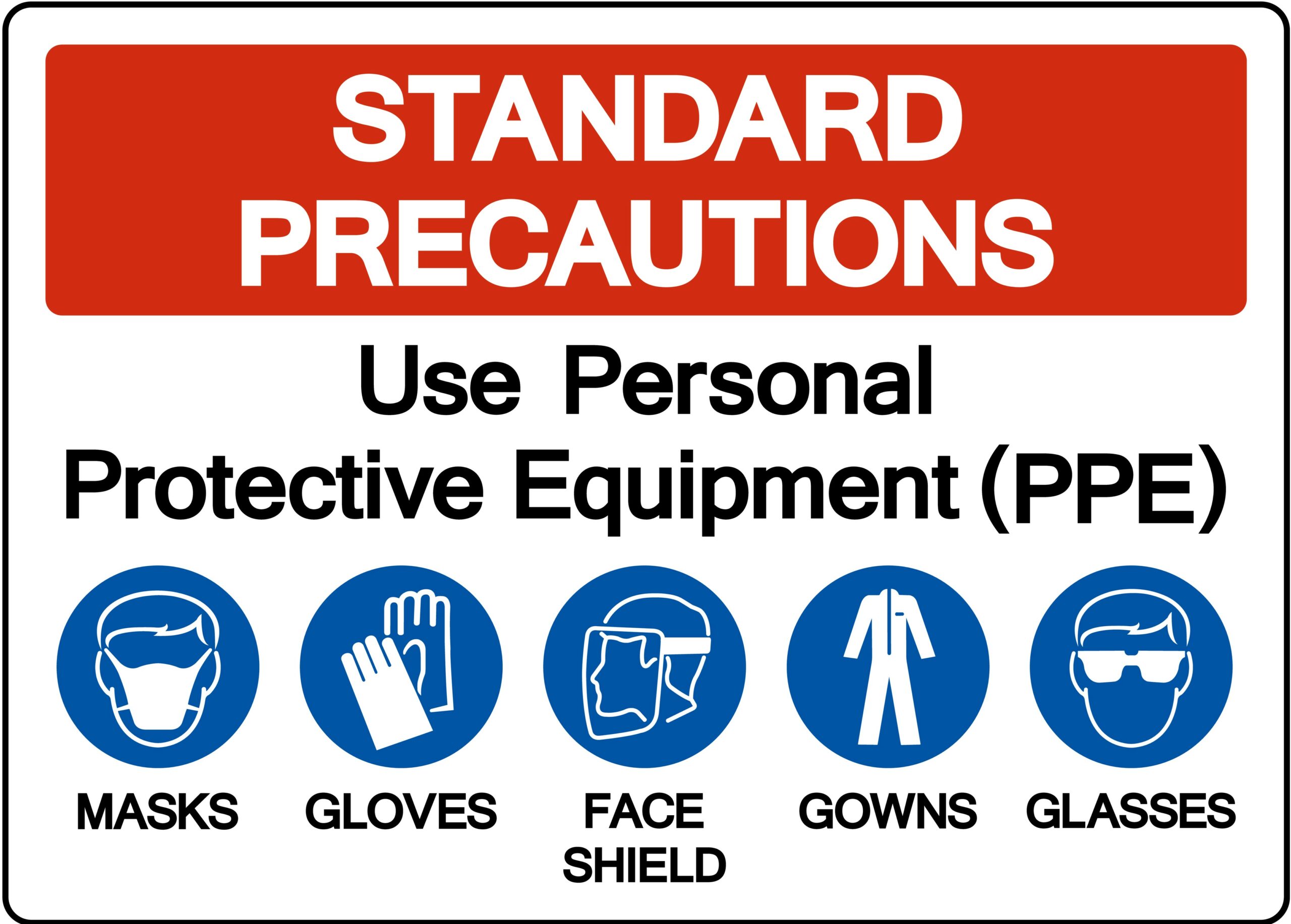
Standard precautions apply to every patient.
Standard precautions do not mean the same PPE is required for every task. PPE selection depends on the anticipated exposure risk, patient symptoms, procedure type, and facility policy. For example, COVID-era masking and eye protection practices may vary by setting, respiratory-virus activity, patient risk factors, and whether aerosol-generating procedures are performed.
When to Add PPE Under Standard Precautions
- Gloves: add when touching blood, body fluids, mucous membranes, non-intact skin, contaminated equipment, or potentially infectious material.
- Gown: add when clothing or exposed skin may contact body fluids, secretions, contaminated equipment, or the patient environment.
- Mask and eye protection: add when splashes, sprays, or respiratory secretions may contact the mouth, nose, or eyes.
- Respirator: add for aerosol-generating procedures or suspected airborne-risk situations when required by policy and organism-specific guidance.
Some examples of standard precautions include cleaning medical devices such as stethoscopes and glucometers after each use, using new needles and syringes each time a clinician punctures a multidose vial, and placing used needles into an approved sharps container.
How to Protect Yourself From Bloodborne Pathogens
This video reviews practical steps for reducing exposure to bloodborne pathogens, including safe glove use, hand hygiene, sharps handling, and avoiding contact with blood or potentially infectious body fluids. It fits this section because bloodborne exposure prevention is a core part of standard precautions.
Contact Precautions
Contact precautions are one form of transmission-based or isolation-based precautions. Contact precautions are used when patients carry infectious agents that may transmit through direct or indirect contact (e.g., when the patient has touched something within the environment).
Contact precautions include:
- Gloves and a gown worn in the patient’s environment.
- Appropriate patient placement. Patients should be placed in a single room rather than shared rooms.
- Clinicians using disposable or dedicated patient-care equipment. If equipment must be shared between patients (i.e. blood pressure cuffs), it must be cleaned and disinfected after each use.
- Frequent room cleaning and disinfection.
- Limiting patient transport and movement.
Clinicians must remember that transmission can occur through direct patient contact or indirect contact with contaminated surfaces and equipment in the room. When entering a contact-precautions room or touching the patient environment, clinicians should follow facility policy for gloves, gown use, hand hygiene, equipment handling, and room cleaning.
Facilities may start contact precautions pre-emptively when symptoms, test results, or exposure history suggest a transmissible organism. Discontinuation criteria vary by organism, clinical status, test results, and infection prevention policy. When a patient is transferred or discharged, the receiving team should be told which precautions were used and whether ongoing isolation is needed.
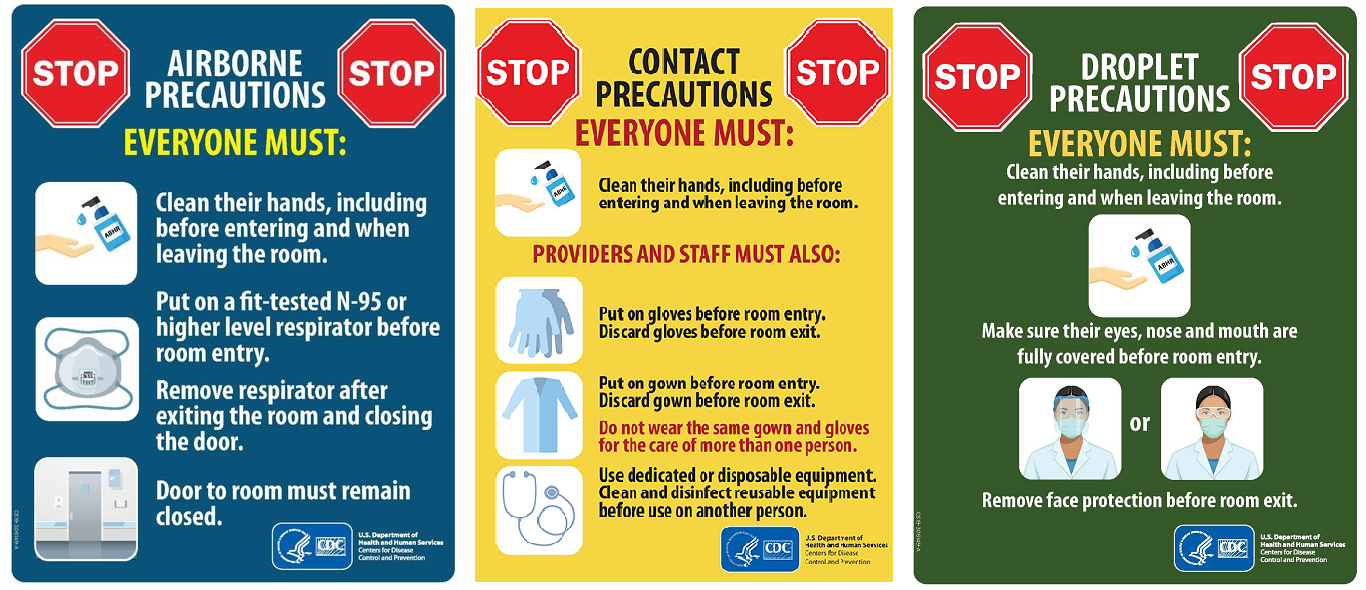
Precaution signs should be posted outside patient rooms.
Read: Chest Tubes: Indications, Components, Nursing Assessments, and Care
Droplet Precautions
Droplet precautions are used for patients known or suspected to have infections spread through respiratory droplets generated when the patient coughs, sneezes, or talks. The droplet-versus-airborne distinction should not be oversimplified as only a matter of drying out; instead, clinicians should follow organism-specific guidance, facility policy, and the current CDC transmission-based precautions guideline.
Droplet precautions are used for pathogens such as:
- Influenza
- Rhinovirus
- Pertussis
Droplet precautions consist of:
- Wearing a surgical mask and gloves upon entry of the room.
- Putting a mask on the patient for source control.
- Ensuring appropriate patient placement. Patients should be placed in a single room rather than shared rooms.
- Limiting transport and movement of the patient.
For droplet precautions, clinicians generally wear a surgical mask upon entry to the patient room or care area. Gloves, eye protection, or a gown may also be needed based on anticipated contact, splash risk, patient symptoms, and facility policy.
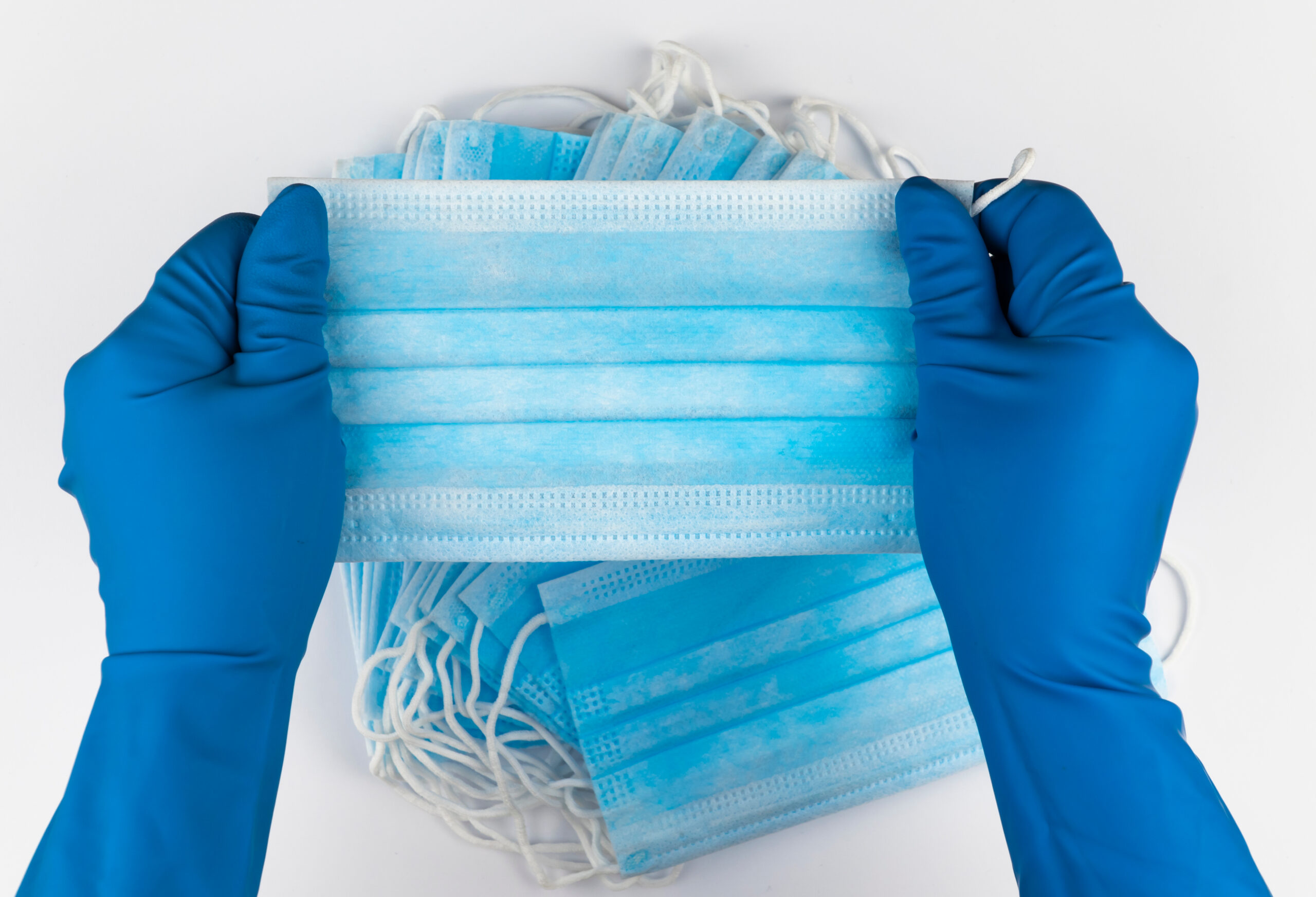
Surgical masks and gloves are required for patients on droplet precautions.
Airborne Precautions
Airborne precautions are used for patients known or suspected to have infections that can remain infectious in small particles and travel through the air. This category is not simply about whether a droplet “dries out”; it depends on the organism, route of spread, procedure risk, ventilation, and facility policy.
For authoritative guidance, review the CDC’s transmission-based precautions guideline. Patients on airborne precautions are typically placed in an airborne infection isolation room (AIIR) when available, and healthcare personnel use a fit-tested NIOSH-approved N95 or higher-level respirator when required.
Airborne precautions include such diseases as:
- Covid-19
- Tuberculosis
- Disseminated herpes zoster
- Measles
- Chickenpox
Depending on the infectious disease and clinical situation, a patient may require more than one precaution category, such as airborne plus contact precautions. COVID-related precautions can differ by setting, patient factors, local policy, community transmission, and whether aerosol-generating procedures are performed. Eye protection may also be required when respiratory secretions, splashes, sprays, or facility policy indicate added protection.
Operational infection control also includes limiting unnecessary room entry, screening visitors, educating visitors about PPE, restricting susceptible healthcare personnel from caring for certain vaccine-preventable airborne infections when immune staff are available, and keeping the AIIR door closed when required.
In summary, the airborne precautions include:
- Wearing a fit-tested N95 mask or higher-level respirator and gloves.
- Putting a mask on the patient for source control.
- Placing the patient in an airborne infection isolation room. The door must remain closed.
- Restricting susceptible healthcare personnel from entering the room.
- Limiting transport and movement of patients.
- Immunizing susceptible persons as soon as possible following unprotected contact with vaccine-preventable infections.
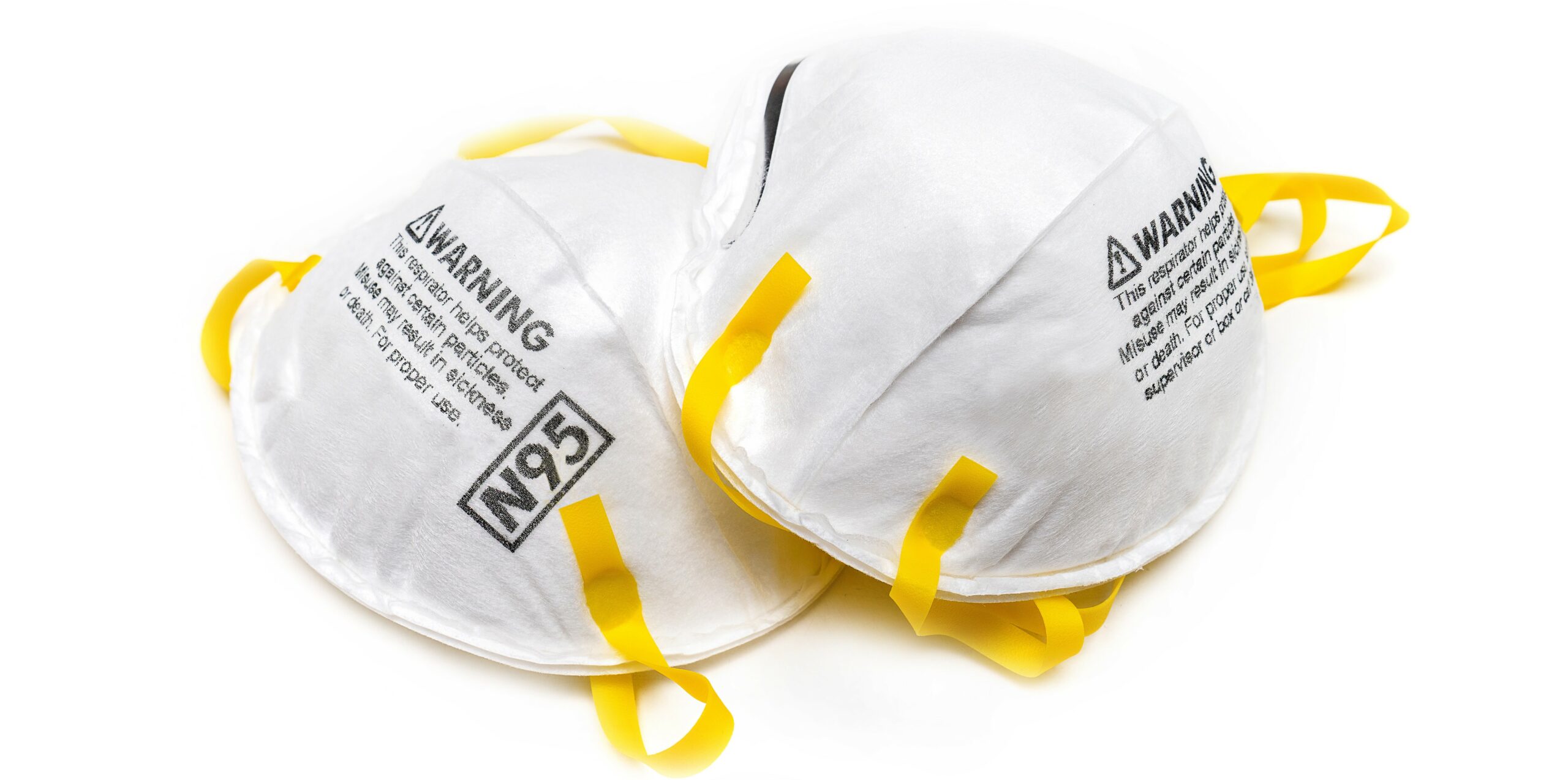
An N95 mask is required for patients on airborne precautions.
Order of Donning and Doffing Personal Protective Equipment
Donning means putting on PPE before exposure. Before donning, perform hand hygiene, choose the PPE required for the precaution type and task, and inspect each item for damage.
Typical donning order: Gown → Mask or respirator → Goggles or face shield → Gloves
Doffing means removing PPE after exposure. Remove PPE slowly and avoid touching contaminated surfaces. Perform hand hygiene after glove removal if hands become contaminated and again after all PPE is removed and after leaving the room.
Typical doffing order: Gloves → Goggles or face shield → Gown → Mask or respirator
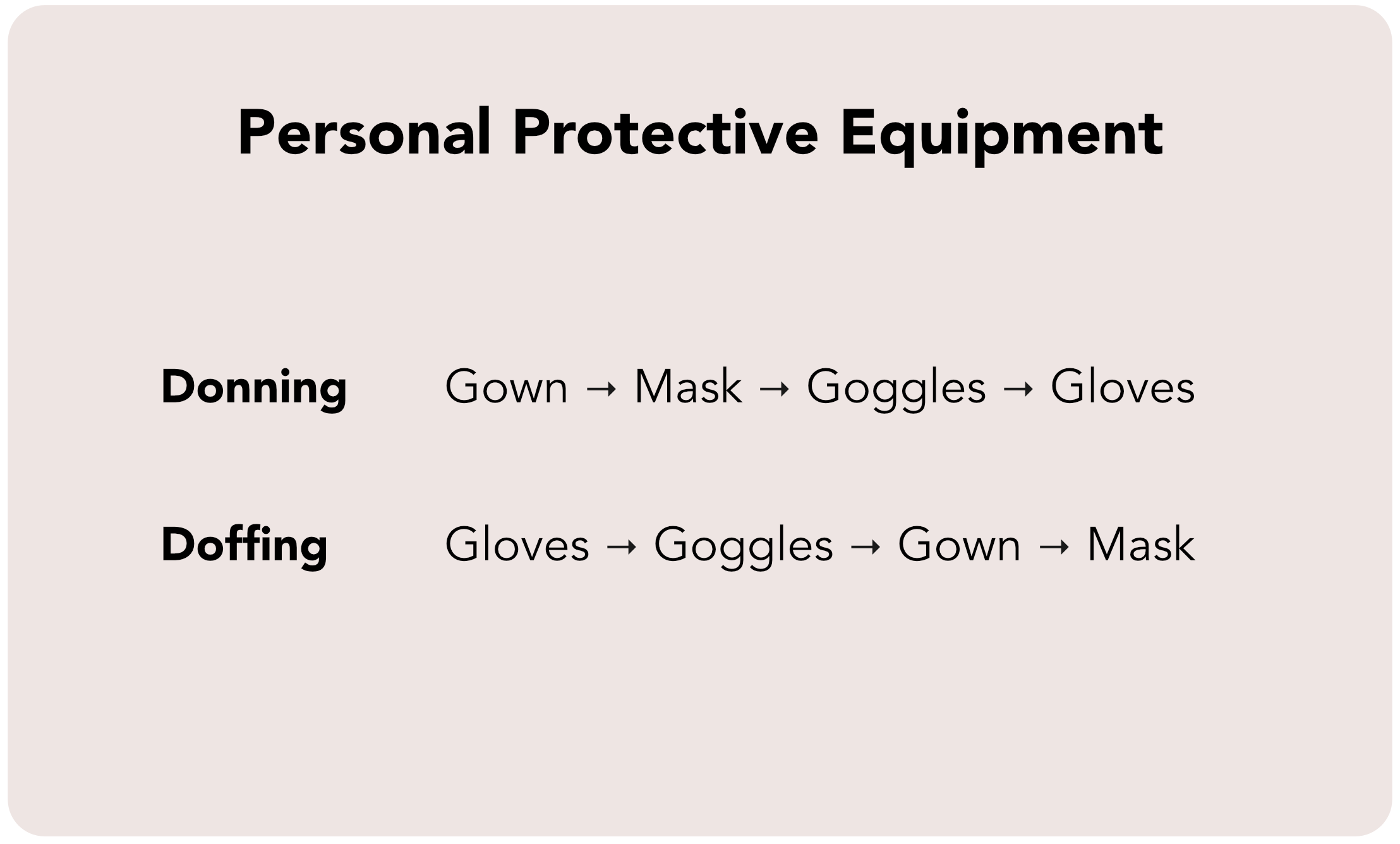
The specific order of donning and doffing personal protective equipment.
Common Mistakes to Avoid
- Skipping hand hygiene before putting on PPE or after removing it
- Touching the front of the mask, respirator, gown, or eye protection during removal
- Removing PPE too quickly and contaminating clothing, skin, or nearby surfaces
- Wearing the wrong PPE for the route of transmission or procedure risk
- Reusing disposable PPE unless facility policy specifically allows it
How to Properly Remove Gloves and Wash Your Hands
This video demonstrates safe glove removal and handwashing technique. It fits here because doffing errors are a common way contaminants reach the hands, wrists, clothing, or nearby surfaces.
Summary
Infection control is the broader system used to reduce the spread of germs, while isolation precautions are targeted steps used when a patient may transmit a specific organism. Standard precautions apply to every patient, and contact, droplet, or airborne precautions are added when the suspected route of transmission requires extra protection.
To choose the correct precaution type, clinicians should consider the suspected organism, symptoms, exposure risk, procedure type, room placement, and facility policy. When in doubt, confirm the plan with infection prevention, follow posted isolation signs, use the correct PPE, and apply the donning and doffing sequence carefully.
Safe practice depends on consistency: clean hands, select PPE based on risk, limit unnecessary transport, communicate precautions during transfer or discharge, and reassess isolation status when diagnostic information changes.
FAQ
When should I start precautions if a diagnosis is not confirmed?
Facilities may start precautions pre-emptively while tests are pending when symptoms, exposure history, or local risk suggest a transmissible organism. Follow policy and escalate questions to the infection prevention control team when needed.
When can isolation be discontinued?
Criteria vary by organism, symptoms, test results, treatment response, and facility policy. Coordinate with infection prevention before discontinuing isolation precautions.
What should I do if a single room is unavailable?
Follow facility policy for cohorting, room prioritization, patient masking, dedicated equipment, and risk-based placement. Consider the organism, transmission route, patient behavior, hygiene needs, and vulnerability of nearby patients.
Do visitors need to follow isolation precautions?
Visitors should follow posted signs and staff instructions for hand hygiene, PPE, room entry, and movement outside the room. Some facilities may screen, limit, or restrict visitors depending on the organism and patient population.
More Free Resources to Keep You at Your Best
Editorial Note
ACLS Certification Association (ACA) uses only high-quality medical resources and peer-reviewed studies to support the facts within our articles. Explore our editorial process to learn how our content reflects clinical accuracy and the latest best practices in medicine. As an ACA Authorized Training Center, all content is reviewed for medical accuracy by the ACA Medical Review Board.
More to Learn
Understand the differences between CPR and defibrillation by reading our article. Learn about their critical roles in cardiopulmonary resuscitation and life-saving interventions.
This article and video detail The Care of Burn Patients. Learn about the pre-hospital and in-hospital emergency care of burn patients.