ACLS Drugs – Lidocaine
ACLS Certification Association videos have been peer-reviewed for medical accuracy by the ACA medical review board.
Article at a Glance
- Lidocaine is a calcium channel blocker antiarrhythmic used in treating VF and pulseless VT.
- The dosage of lidocaine is 1-1.5 mg/kg as a first dose and the second dose is half the first for a total of 3 mg/kg.
- Side effects of lidocaine include hypotension, altered mental status, seizures, and slurred speech.
- The provider should administer lidocaine and follow with a saline bolus.
Introduction to Lidocaine
The purpose of this article is to provide a complete, up-to-date guide on the use of Lidocaine according to current ACLS drugs guidelines. It covers when Lidocaine is indicated, recommended dosing ranges, administration techniques, and potential side effects. By presenting the latest evidence-based recommendations, this resource helps healthcare providers apply ACLS standards effectively in clinical practice.
How it Works
Lidocaine is classified as a Class I antiarrhythmic drug, meaning it acts primarily as a sodium channel blocker. By inhibiting the influx of sodium ions during the depolarization phase of the cardiac action potential, Lidocaine slows conduction and reduces excitability in cardiac tissue.
This mechanism is particularly effective against re-entrant ventricular rhythms, such as ventricular tachycardia, because it interrupts the abnormal electrical circuits responsible for sustaining these arrhythmias. By stabilizing the cardiac membrane and suppressing irregular conduction pathways, Lidocaine helps restore a more organized rhythm and supports the overall goals of ACLS in managing life-threatening ventricular arrhythmias.
Related Video – ECG Rhythm Review – Ventricular Fibrillation
Related Video – ECG Rhythm Review – Ventricular Tachycardia
So after going back to chest compressions, we’re going to administer an antiarrhythmic. We can use lidocaine or amiodarone. Either one is fine.

Lidocaine is an antiarrhythmic in the sodium channel blocker family (Class I).
Dosing
The dosing parameters for lidocaine are 1–1.5 mg/kg. Next, we’ll learn why there is such a range. Here is an example: a manufacturer’s package: 100 mg in 5mL.
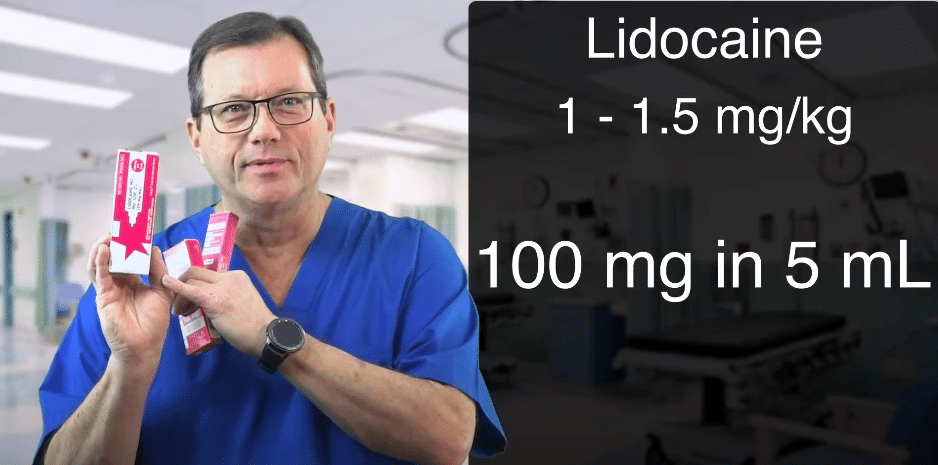
Lidocaine comes packaged as 100mg in 5mL.
Think about this dosing example: If I wanted to administer 1mg/kg and I wanted to use that whole ampule — the whole 100 milligrams — my patient would have to weigh 100 kg (or 220 pounds). If I gave the whole thing, 100 mg at a dosing of 1 mg/kg, my patient weighs 220 pounds.
Now, if I wanted to administer 1.5 mg to my patient and use the whole vial, all 100 mg, my patient would have to weigh 66 kg (or about 146 pounds). So what does that mean? In short, if your adult patient weighs between 146 pounds and 220 pounds, administer the whole 5 mL, or 100 mg, and you will be dosing that patient within the recommended dosing parameters of 1–1.5 mg/kg. For elderly patients, you may want to cut the dose in half. Follow your local protocols.
Related Video – What is the Dosage Calculation?
Next, we will cover the initial and subsequent dosing for lidocaine. The initial dose of lidocaine is 1–1.5 mg/kg. A second dose, if required, would be half of that, or 0.5–0.75 mg/kg. Following the return of spontaneous circulation, a continuous maintenance infusion may be initiated. It is important to note that maintenance doses must be carefully adjusted for elderly patients or those with impaired liver function to prevent toxicity.
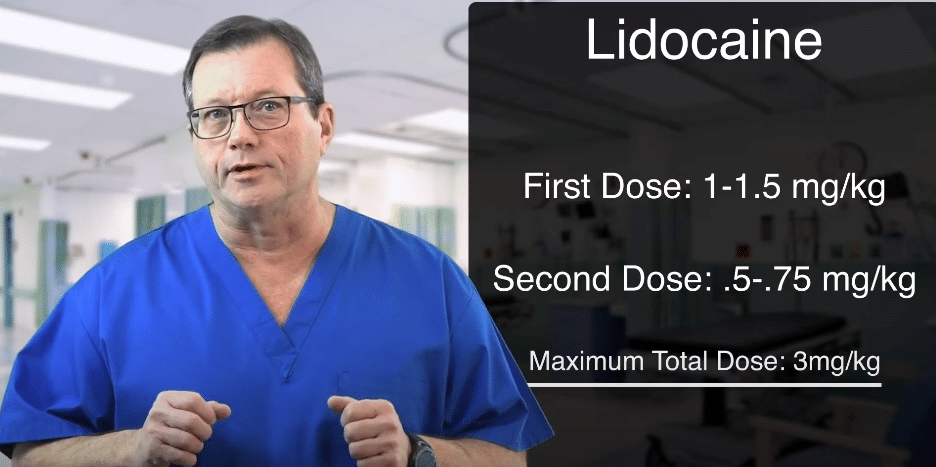
If a second dose of lidocaine is required, the second dose is half the first dose.
Drug Administration
Indications
Lidocaine is indicated in ACLS for the treatment of life‑threatening ventricular arrhythmias, including those triggered by an acute myocardial infarction. Prior to or concurrent with antiarrhythmic therapy, providers should also consider the correction of any electrolyte imbalances. It is most commonly used in the following situations:
- Ventricular Fibrillation (VF) or Pulseless Ventricular Tachycardia (VT) unresponsive to defibrillation and CPR.
- Stable Ventricular Tachycardia with a pulse, especially when amiodarone is unavailable or contraindicated.
- As an alternative antiarrhythmic when amiodarone cannot be used due to allergy or intolerance.
- In certain post‑cardiac arrest settings to suppress recurrent ventricular arrhythmias or significant ectopy.
How We Administer Lidocaine
Keep in mind how we administer the medication. Remember, antiarrhythmics have to get to the heart to be effective. After you administer that medication by IV route, you follow it with a 10–20 mL syringe bolus of saline to help push that drug to the heart.
If they’re in ventricular fibrillation (VF), they have no cardiac output. Compressions provide maybe 20 or 25% of the normal cardiac output, so we have to help that medication get to the heart quickly and in sufficient concentration to cause an effect.
Side Effects
Adverse side effects due to lidocaine, based on what is published, are altered mental status, slurred speech, hypotension, and seizures. Watch for hypotension with the administration of any antiarrhythmic.
As for seizures, it is rare. However, every time I’ve administered lidocaine within the context of ACLS, my patient was at that time, almost dead, and that they had no pulse and were not spontaneously breathing. I’ve never actually seen a seizure with lidocaine, but it is something to watch for.
Read: ACLS Drugs – Epinephrine
Related Video – What is Cardiac Output?
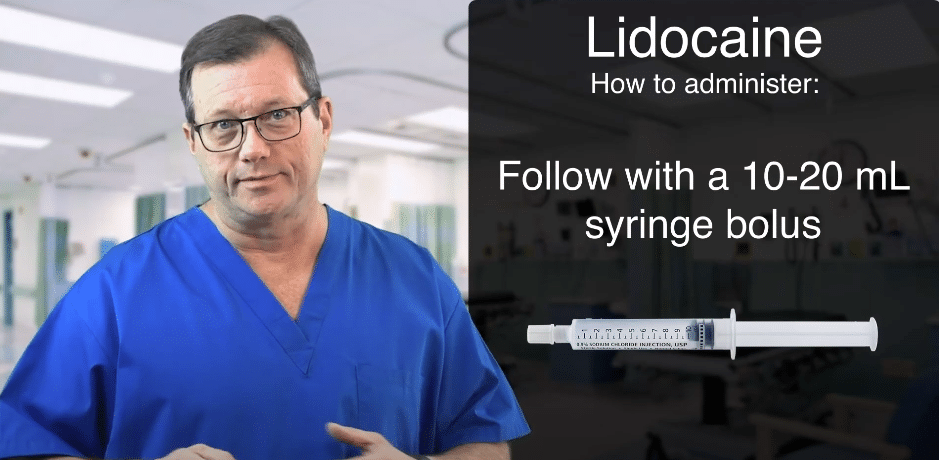
Follow the lidocaine with a saline bolus to help push the drug to the heart.
Summary
Lidocaine has several usages in ACLS. After reading this article, you now understand the dosing information, side effects, and administration.
More Free Resources to Keep You at Your Best
Editorial Sources
ACLS Certification Association (ACA) uses only high-quality medical resources and peer-reviewed studies to support the facts within our articles. Explore our editorial process to learn how our content reflects clinical accuracy and the latest best practices in medicine. As an ACA Authorized Training Center, all content is reviewed for medical accuracy by the ACA Medical Review Board.
More to Learn
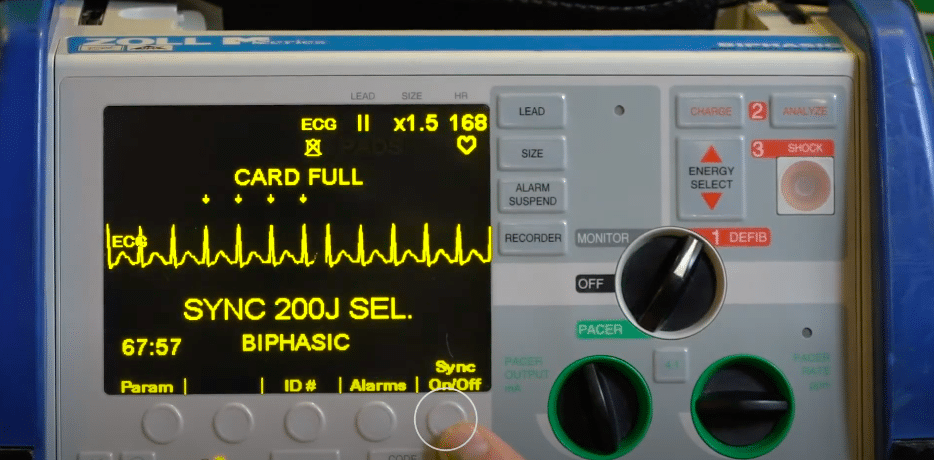
Learn the technique of synchronized cardioversion at ACLS Certification Association. Our article helps you acquire the skills to deliver effective electrical therapy.
In-Hospital Cardiac Arrest Care is the first aspect of the system of care, a framework for linking the interdependent components of healthcare institutions' resuscitation system.