Anti-Anxiety Medications
This comprehensive guide covers the essentials of anti-anxiety medications, designed for clinicians, nursing students, and patients seeking to understand their treatment options. You will learn about the main types of anxiety medications, their specific use-cases, how quickly they take effect (onset), and their key risks. Understanding these nuances is critical for choosing the right therapy and ensuring safe, effective patient care.
ACLS Certification Association videos have been peer-reviewed for medical accuracy by the ACA medical review board.
Table of Contents
- Introduction to Anti-Anxiety Medications
- What are the main types of anti-anxiety medications?
- Benzodiazepines
- Atypical Anxiolytics
- Antihistamines
- Serotonin Norepinephrine Receptor Inhibitors (SNRIs) and Selective Serotonin Receptor Inhibitors (SSRIs)
- Non-selective Beta-blockers
- What are the side effects or risks of medicines for anxiety?
- Summary
Article at a Glance
- Some common anti-anxiety medications include benzodiazepines, buspirone, hydroxyzine, duloxetine, escitalopram, and propranolol. Providers must differentiate between first-line, long-term treatments (like SSRIs/SNRIs) and short-term relief options (like benzodiazepines).
- Different anti-anxiety medications work for different types of anxiety. Crucially, some medications act rapidly to halt acute symptoms, while others have a delayed onset, taking weeks to reach full efficacy.
- Clinicians will learn about five common classes of medications used to treat anxiety, along with vital safety guidelines including drug interactions and the dangers of suddenly stopping or tapering without clinical supervision.
Introduction to Anti-Anxiety Medications
Anti-anxiety medications are necessary when anxiety symptoms become severe, pervasive, and begin to interfere with a person’s daily life, sleep, or physical health. While therapy is a cornerstone of treatment, medications work on a physiological level to alter brain chemistry. Generally, these medications work by targeting neurotransmitters, the chemical messengers in the brain, such as serotonin, norepinephrine, and gamma-aminobutyric acid (GABA), helping to calm overactive neural pathways and restore emotional balance.
Clinical Conversation Catalyst: When discussing these medications with a patient, providers should explicitly frame the conversation around individualized risks and tradeoffs. Key talking points should include the appropriateness of the drug for their specific symptoms, potential drawbacks (such as sedation or dependence), and the expected benefits over their current regimen or unmedicated state.
Many types of drugs treat anxiety.
What are the main types of anti-anxiety medications?
Anti-anxiety medications are generally broken down into “major categories” designed for primary mental health treatment (like SSRIs and SNRIs) and “other options” that are used off-label, for physical symptom management, or for short-term relief (like Beta-blockers and Antihistamines). The table below offers a high-level summary.
| Class | Often Used For | Onset | Key Cautions |
|---|---|---|---|
| Benzodiazepines | Acute anxiety/panic attacks | Fast (Minutes to hours) | Dependence, respiratory depression |
| SSRIs & SNRIs | Generalized anxiety, maintenance | Delayed (2-6 weeks) | GI upset, do not stop abruptly |
| Atypical (Buspirone) | Generalized anxiety | Delayed (2-4 weeks) | GI upset, dizziness |
| Antihistamines | Mild anxiety, situational | Fast (Minutes to hours) | Sedation, anticholinergic effects |
| Beta-blockers | Performance/social anxiety | Fast (Hours) | Avoid in asthma/COPD, hypotension |
Benzodiazepines
Of all the anxiety medications, benzodiazepines are the only one prescribed exclusively for anxiety. The rest treat other illnesses such as depression or insomnia. Benzodiazepines end in “-pam,” such as clonazepam and lorazepam. They calm patients down.
Onset and Duration: Benzodiazepines are typically fast-acting, providing rapid relief. However, the exact onset and duration vary widely depending on the specific agent used and the individual patient’s metabolism.
Benzodiazepines directly enhance the effects of gamma aminobutyric acid (GABA), a neurotransmitter that protects the brain from overstimulation. Enhancing GABA produces drowsiness, sedation, and lethargy.
Because of their fast onset, benzodiazepines are an effective treatment for acute anxiety attacks. Clinically, it is important to distinguish between generalized anxiety (which features constant, low-level worry) and panic attacks (which are sudden, intense physiological events). Benzodiazepines have a profound effect, and providers administer them to people with severe anxiety and panic disorders to halt these acute spikes in panic.
Key Risks and Warnings:
- Respiratory Depression: This is the most damaging potential side effect.
- Dependence and Tolerance: Physicians should thoroughly monitor the patient’s dependence and tolerance when they’re regularly taking benzodiazepines.
- Dangerous Interactions: Patients must strictly avoid combining benzodiazepines with alcohol or other sedatives, as this exponentially increases the risk of fatal respiratory depression unless explicitly directed by a clinician.
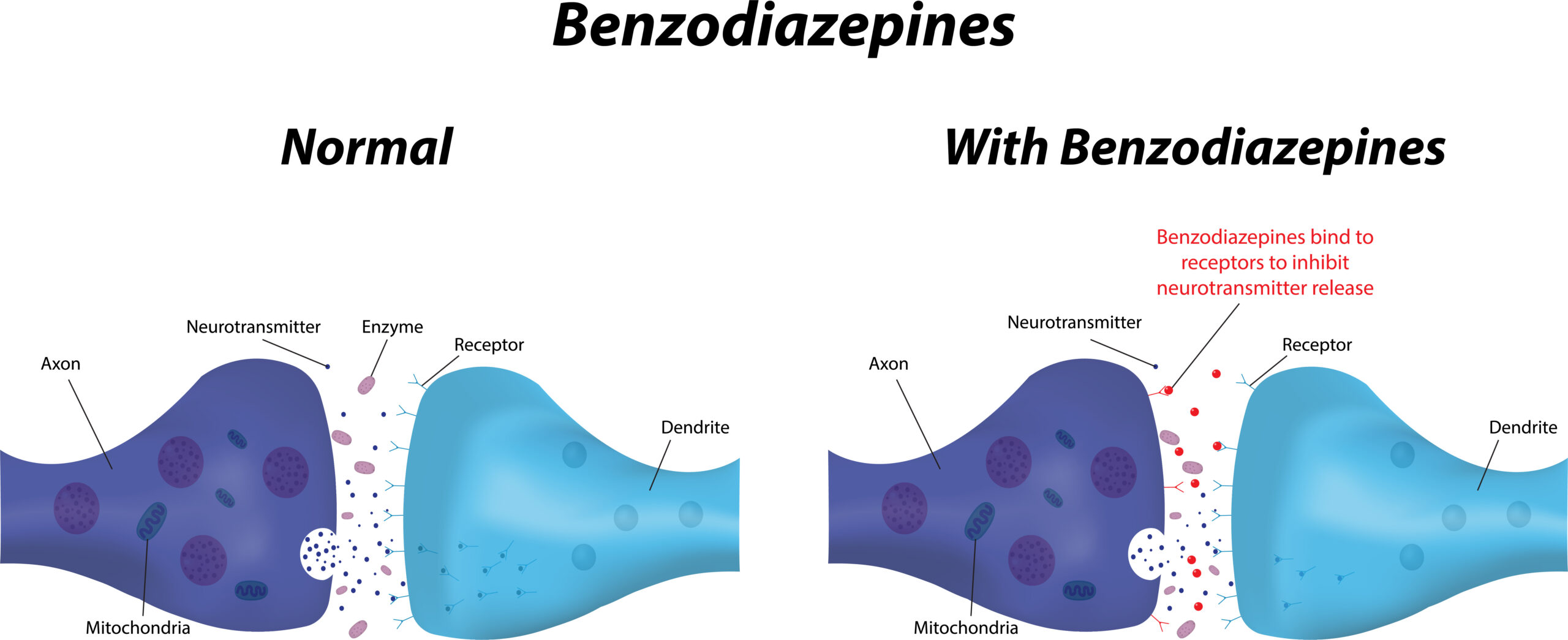
Benzodiazepines enhance the effects of GABA.
Because many anti-anxiety medications (such as SSRIs, SNRIs, and certain atypical agents) were initially developed as antidepressants, understanding how these classes function is highly relevant. The video below provides an excellent foundation on antidepressant medications, bridging the gap to the next sections.
Atypical Anxiolytics
The main atypical anxiolytic is buspirone (BuSpar®). It’s often prescribed for depression because it increases free levels of serotonin and dopamine, neurotransmitters thought to be low in patients who experience major depressive disorder. Those neurotransmitters have a calming effect, which helps treat the anxiety.
Onset of Action: Buspirone takes days to weeks to reach full therapeutic effect. Because of this delayed onset, providers should set realistic expectations: it is highly unlikely to provide rapid relief for acute anxiety, severe anxiety, acute panic, or severe panic. Instead, it is prescribed for generalized anxiety to control the disorder over time.
It’s important that providers inform patients of buspirone’s potential gastrointestinal (GI) side effects:
- Nausea
- Constipation
- Administration Tip: Providers should advise patients to administer it with food to minimize discomfort.
Read: Dosage Calculation Explained
Antihistamines
While antihistamines include Benadryl®, there is another called hydroxyzine (Vistaril®). Providers frequently prescribe this medication for anxiety and occasionally for insomnia. The antihistamines directly block histamine receptors, causing sedation and decreasing anxiety.
Antihistamines are not used for acute panic. Instead, they’re administered primarily for mild or situational anxiety, such as mild performance anxiety or social anxiety.
Providers should inform patients of antihistamines’ possible GI side effects, especially anticholinergic side effects which dehydrate a patient. Common side effects include:
- Dry eyes and dry mouth
- Constipation and abdominal cramps
- Headache (a very common side effect of hydroxyzine and other antihistamines)
Serotonin Norepinephrine Receptor Inhibitors (SNRIs) and Selective Serotonin Receptor Inhibitors (SSRIs)
Both SNRIs and the SSRIs are prescribed for depression. SNRIs increase serotonin and norepinephrine levels, while SSRIs only increase serotonin levels.
The prototype SNRI prescribed for anxiety is duloxetine and is also prescribed for neuropathic pain. The standard SSRI is escitalopram. Both duloxetine and escitalopram are also prescribed for depression.
Because these medications require weeks to build up in the system, they are not typically utilized as immediate interventions for acute or severe anxiety. Instead, they’re administered mostly as foundational maintenance for generalized anxiety disorders.
Providers must let patients know of the similar GI side effects, especially diarrhea. To mitigate this:
- Patients should take these drugs with food to minimize the side effects.
- Do Not Stop Suddenly: Discontinuation syndrome is a risk; patients should never stop taking these medications abruptly.
- Clinician Reassessment: Switching medications or adjusting doses is very common. This should always be a clinician-guided process to ensure safety and effectiveness.
Non-selective Beta-blockers
Beta-blockers block the stimulation of epinephrine and norepinephrine, calming the heart rate, dilating blood vessels, and reducing the overall heart workload.
Non-selective indicates the beta-blocker doesn’t differentiate between beta-receptors on the heart versus the lungs. Normally, when beta-receptors on the lung are activated, bronchodilation is present. However, when beta-receptors are blocked by beta-blockers, bronchoconstriction occurs.
⚠️ CLINICAL CAUTION: ASTHMA & COPD
Non-selective beta-blockers put patients at higher risk for bronchoconstriction, and they’re contraindicated in patients with respiratory disease. Providers should not administer non-selective beta-blockers to patients with asthma or severe COPD. It can send the patient into bronchoconstriction respiratory distress.
Non-selective beta-blockers are great for performance anxiety, social anxiety, and calming the symptoms associated with anxiety, as well as slowing the heart rate. They’ll also prevent the tremors and sweating associated with performance anxiety.
Propranolol is the prototype non-selective beta-blocker prescribed for anxiety. Providers must monitor the patient for hypotension, bradycardia, dizziness, and lightheadedness, especially if the patient isn’t initially hypertensive. If a patient with normal blood pressure is administered a beta-blocker, their blood pressure must be monitored.
These are the most common drug classes administered to treat anxiety disorders.
What are the side effects or risks of medicines for anxiety?
While each class has unique properties, there are common side effects and risks that patients and providers must be vigilant about. Always refer to the specific medication class sections above for detailed profiles, but generally, expect to monitor for:
- Sedation and Cognitive Blunting: Especially common with Benzodiazepines and Antihistamines.
- Gastrointestinal (GI) Effects: Nausea, diarrhea, or constipation are frequent when starting SSRIs, SNRIs, or Buspirone.
- Dependence Risk: A severe risk primarily associated with Benzodiazepines.
- Cardiovascular & Anticholinergic Effects: Beta-blockers require monitoring for hypotension and bradycardia, while antihistamines often cause dry mouth and dehydration.
High-Level Safety Guidance:
- Avoid Alcohol and Sedatives: Mixing central nervous system depressants can lead to fatal respiratory depression.
- Review All Interactions: Always cross-reference new anxiety medications with a patient’s existing prescriptions and over-the-counter supplements.
- Clinician-Guided Changes: Never abruptly stop or adjust the dose of an anti-anxiety medication without direct guidance from a healthcare provider.
Summary
Managing anxiety effectively often requires pharmacological intervention, ranging from rapid-relief options like benzodiazepines to long-term maintenance medications like SSRIs and SNRIs. Understanding this key distinction, fast relief versus delayed maintenance, is crucial for patient safety and outcome success. Always discuss all options, potential side effects, and necessary monitoring with a healthcare clinician before beginning a regimen.
Who is this chart for? The summary image below is an excellent quick-reference tool for clinicians, nursing students, and patients to visualize the five main drug classes discussed in this article. How to use it: Use it to quickly recall the typical uses and primary cautions for each medication type. Always review the side effects and alternatives discussed in the sections above before making clinical decisions.
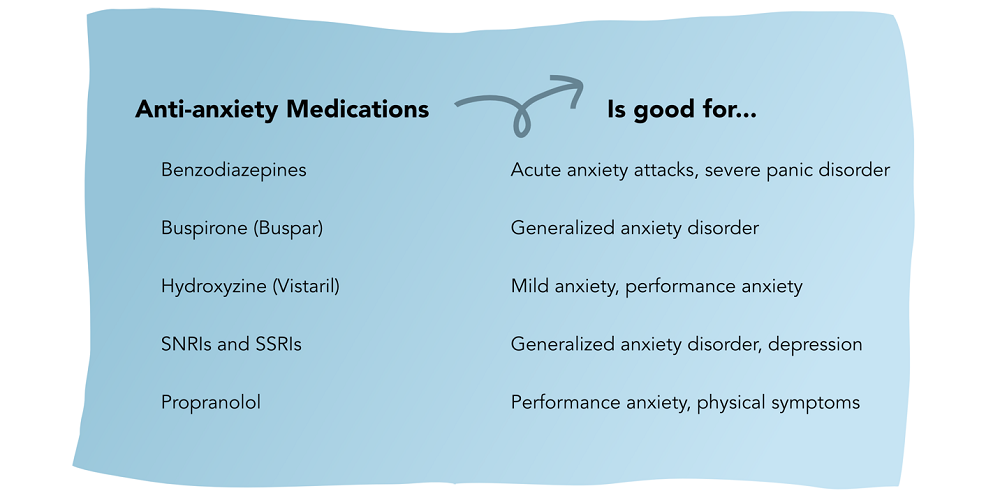
Summary of Anti-Anxiety Medications
More Free Resources to Keep You at Your Best
Editorial Note
ACLS Certification Association (ACA) uses only high-quality medical resources and peer-reviewed studies to support the facts within our articles. Explore our editorial process to learn how our content reflects clinical accuracy and the latest best practices in medicine. As an ACA Authorized Training Center, all content is reviewed for medical accuracy by the ACA Medical Review Board.
More to Learn

Master injectables calculations with our comprehensive guide. Learn the formula for accurate drug calculations to ensure precise medication administration.

Get the Opioid Overdose algorithm at ACLS Certification Association. Our article provides you with essential knowledge to effectively respond to opioid overdose emergencies.